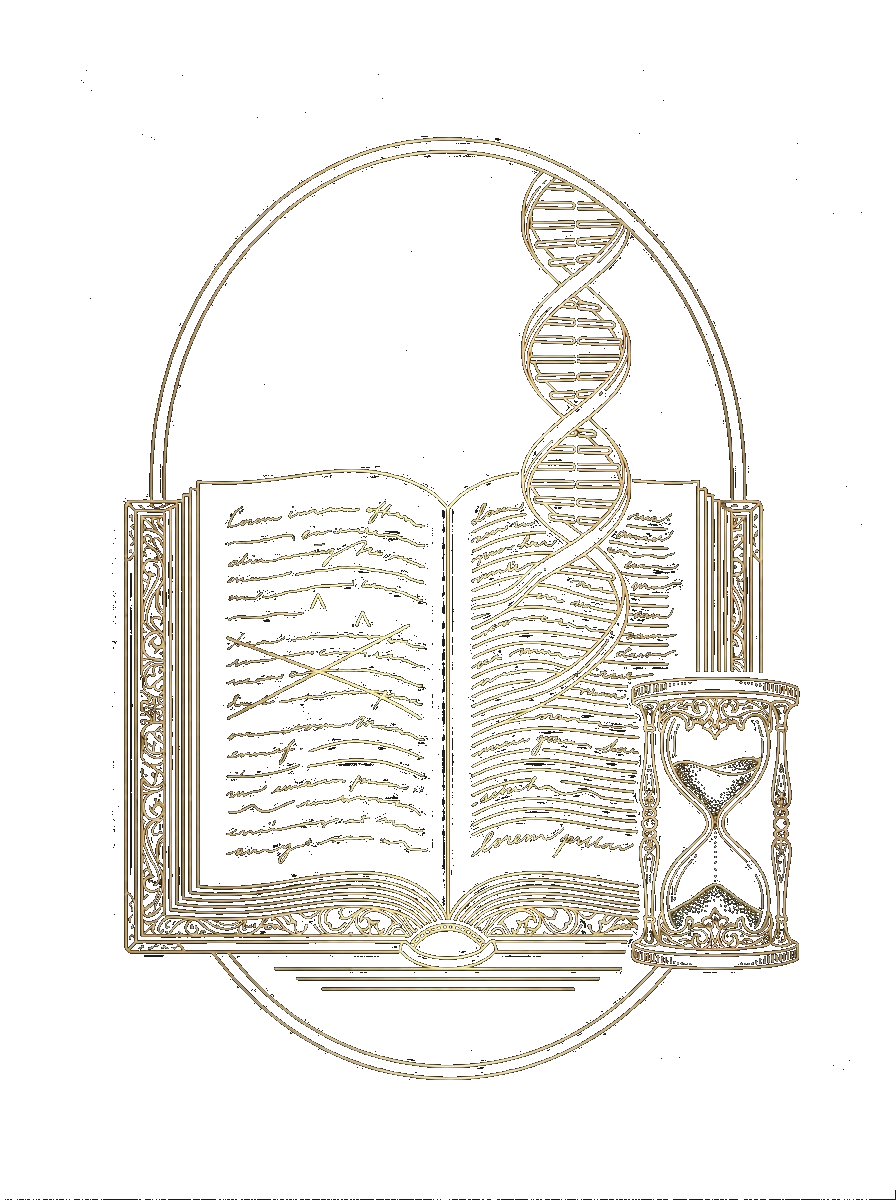
Every cell in your body carries the same genome you were born with. The same three billion letters. The same sequence your parents wrote in a moment neither of them was thinking about posterity. That code hasn’t changed since the day you arrived.
But something has been writing on top of it.
Think of your DNA as a blueprint — a master document, sealed under glass. You cannot add a room. You cannot remove a wall. The architecture was decided before you drew your first breath.
But someone has been taping notes to the glass.
Some notes say build this. Others say skip this section. Others say run this at half speed. The notes change depending on what happens to you — what you eat, what you breathe, how you sleep, what you survive. A lifetime of annotations, layered over the original plan, altering what gets built without ever touching the plan itself.
Science calls these notes the epigenome. We call it the changelog.
The changelog is not a metaphor. It is chemistry. Molecular tags — methyl groups, acetyl markers, histone modifications — attach to specific sites on your DNA and silence them. Or activate them. Or dial them from full capacity to a fraction of their output. Every cigarette you smoke adds entries. Every meditation session writes others. Every sleepless night, every sustained period of stress, every month of disciplined exercise — revision after revision, authored in a language your cells read fluently even if you never learned it.
This is why two people born the same year can age at completely different rates.
One has a changelog full of clean entries — consistent sleep, managed inflammation, the right fuel for the engine delivered at the right time. The other has accumulated decades of revisions that gradually silenced repair genes, amplified inflammatory pathways, and edited the master document into something its original architect wouldn’t recognize.
Their DNA is identical. Their changelogs are not. One is biologically 38 at chronological 50. The other is biologically 62. Same blueprint. Different revision history. The distance between them is not written in the genome. It is written on it.
Your DNA is the blueprint. Your epigenome is the revision history. One you inherited. The other, you’re writing right now.
Remember the 30% engine? The factory-installed variant that restricts a critical enzyme to a fraction of its designed capacity? Even that configuration can be tuned by how you live. The enzyme variant itself is hardcoded — you cannot swap a slow processor for a fast one. But the epigenome can amplify compensating pathways, upregulate alternative routes, adjust the cellular environment the enzyme operates in. The hardware doesn’t change. The software layer adapts to protect it.
This is epigenetics in practice: not rewriting the source code, but changing which lines of it get executed.
Not every entry in the changelog is reversible. That is the part the wellness industry does not advertise.
Some edits — particularly those written during development, during the first thousand days of life, during periods of extreme toxic exposure — become permanent annotations. They do not wash off with a cleanse. They do not reset with a retreat. They become part of the operating manual your cells consult every time they divide.
And some entries are not even yours. Research on intergenerational epigenetics has demonstrated that famine, trauma, and chronic stress can leave marks that transmit to the next generation. Your grandfather’s war. Your mother’s hunger. Entered into the changelog before you existed. Inherited not in the genome — but on top of it.
But most entries are yours. And the ones that are yours are the ones you can still write.
Every day you are authoring the next revision. The morning run. The skipped meal. The third drink. The hour of deep work. The argument you swallowed instead of releasing. Each one is an entry. Each one adjusts which genes speak loudly and which ones stay silent.
You are not editing your DNA. You are editing the instructions for how your DNA gets read. That distinction sounds academic — until you realize it is the difference between biologically 38 and biologically 62. Same letters. Different reading.
The changelog is open. The cursor is blinking. And the entries you write today will be read by every cell in your body tomorrow.
Some of the most consequential revisions are the ones you cannot feel being written — the slow, silent annotations that accumulate without symptoms, without warnings, without pain. They build quietly, over years, in the background of a life that feels perfectly fine.
Until the body reads them aloud.